
Many of us look forward to reading a good book, seeing the faces of loved ones, and driving on a sunny day. These activities depend on your central vision, the sharp, detailed sight you use to look straight ahead. However, an eye condition called age-related macular degeneration (AMD) can affect this part of your vision.
Age-related macular degeneration (AMD) is a leading cause of vision loss for people over 55, affecting approximately 2.5 million Canadians. While it becomes more common with age, regular eye care can help you manage your eye health and protect your sight for years to come.
What Is AMD & How Does It Affect Your Vision?
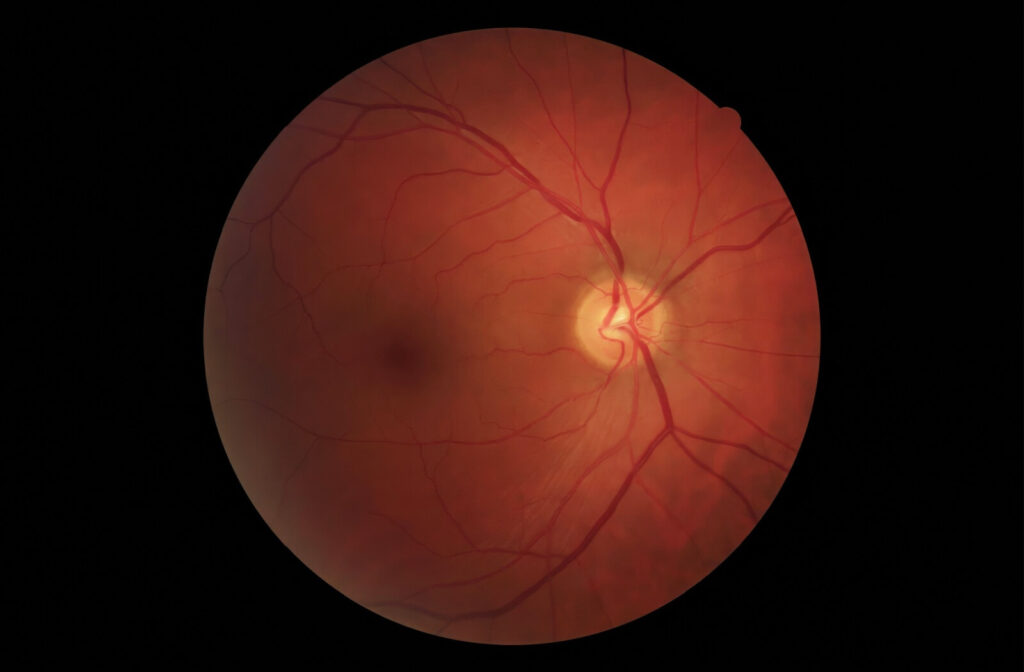
Your eye has a small area on the retina called the macula, which is responsible for sharp, straight-ahead vision. Think of it as the high-definition part of your sight. AMD happens when the cells in this important area start to break down.
AMD affects your ability to see fine details, whether you’re up close or far away. It can make tasks like reading a prescription bottle, seeing street signs, or even cooking a meal more difficult.
AMD doesn’t typically cause complete blindness because your side—or peripheral—vision usually remains. However, the loss of your central vision can have a significant impact on your daily life and independence.
The 2 Main Types of AMD
Dry AMD
The majority (90%) of people with AMD have the “dry” form, which accounts for about nine out of every ten cases. This type happens when the macula gets thinner with age, causing a gradual blurring of your central vision. Because the changes are slow, you might not notice any symptoms at first.
Some common signs of dry AMD include:
- A slight blurriness in the centre of your vision
- A need for brighter light when you read or do close-up work
- Colours that appear less bright or vibrant than before
- Difficulty recognizing faces
Wet AMD
“Wet” AMD is less common, but it is often more serious. It develops when new, unstable blood vessels grow beneath the retina. These blood vessels can leak blood and other fluids, which can in turn damage the macula and lead to vision loss more quickly.
The symptoms of wet AMD can appear quite suddenly. You may notice:
- Straight lines, such as a door frame or a telephone pole, that look wavy or bent
- A dark or empty spot that appears in the centre of your vision
- A rapid and noticeable blurring of your central sight
Key Risk Factors for AMD
While anyone can develop AMD, certain factors can increase your risk. Age is the most significant factor, but your personal health and family history also play an important role.
Your genetics can influence your risk, so if a close family member like a parent or sibling has AMD, it’s a good idea to mention it during your eye exams. Other health factors, such as smoking, can contribute to the condition.
Minimizing Your Risk
Lifestyle choices, including your diet and activity level, can also affect your eye health. Good practices for maintaining healthy vision include:
- Eating a balanced diet rich in leafy green vegetables, colourful fruits, and fish high in omega-3 fatty acids.
- Staying active with regular physical activity that you enjoy.
- Protecting your eyes from the sun by wearing sunglasses with UV protection whenever you’re outdoors.
- If you smoke, quitting is one of the most helpful steps you can take for your eye health.
How an Eye Doctor Diagnoses & Monitors AMD
Regular, comprehensive eye exams are important for catching AMD in its early stages—often before you notice any changes in your vision. Your eye doctor will check for small yellow deposits under the retina called drusen, which can be an early indicator.
At See Eye Clinic, we provide macular degeneration testing to get a detailed look at your macula’s health. These detailed assessments help us understand your situation and create a plan to manage your eye health effectively.
Treatments & Lifestyle Support for AMD
Management for Dry AMD
There is currently no cure for dry AMD, but certain strategies can help you manage the condition and support your vision. We may suggest a special formula of vitamins and minerals known as AREDS2. This nutritional supplement may help slow the progression of AMD for people who are in the intermediate or late stages of the disease.
Treatments for Wet AMD
For wet AMD, there are treatments to help slow its progression and prevent further vision loss. These treatments often involve injections of medication into the eye. This can help reduce the number of abnormal blood vessels and decrease the fluid leakage.
Low Vision Aids
Low vision aids can also help you adapt to vision changes and continue with your favourite activities. Tools like magnifying glasses, special reading lamps with bright light, and screen readers for your computer or phone can help you make the most of your remaining vision.
Protect Your Vision
Your vision is an important part of your life, and taking proactive steps to protect it is always a good idea. Understanding AMD and its risk factors is the first step toward managing your eye health for the long term.
At See Eye Clinic, we’re here to support you and your family with comprehensive eye care. If you have questions about your vision or want to schedule a check-up, contact your eye doctor in Winnipeg today.